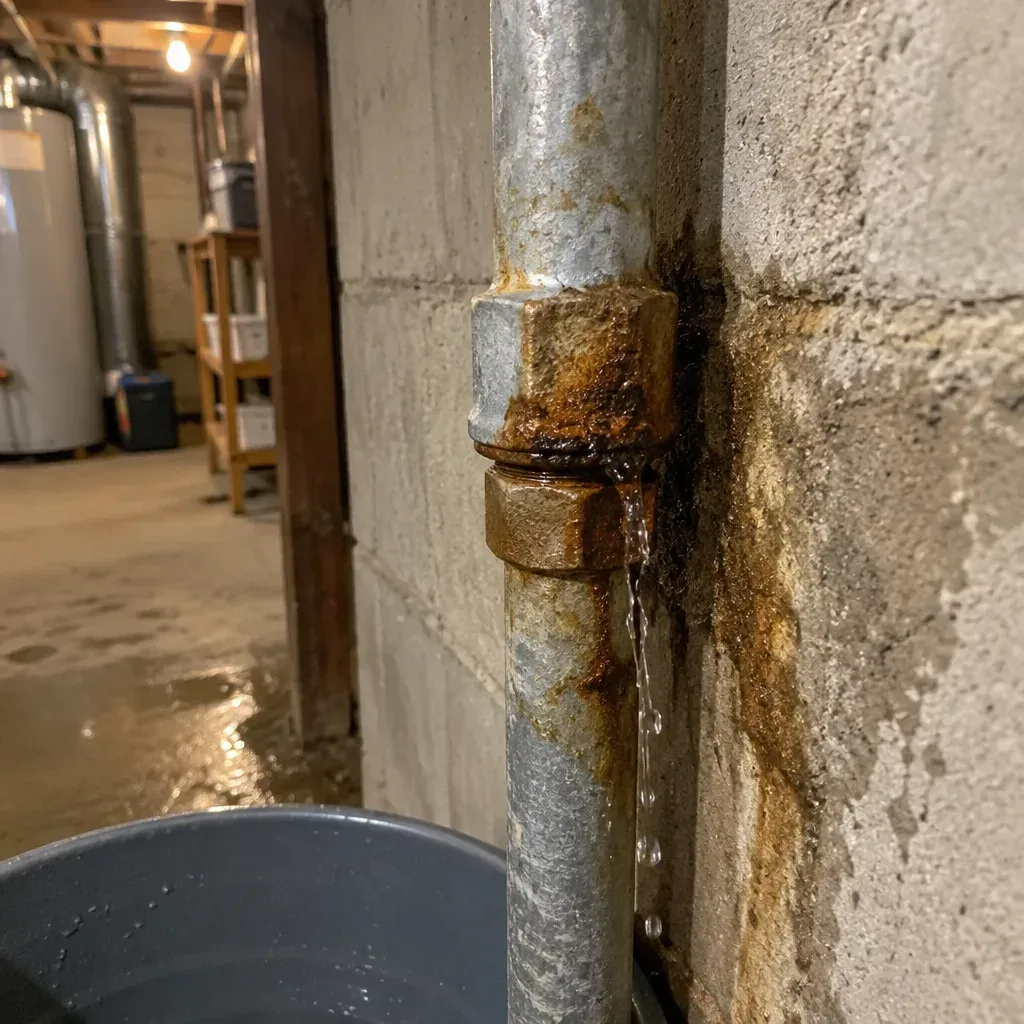
Corrosion That Thins Pipe Walls
Boulder’s cold-weather guidance warns that arctic cold can put exposed or unheated home plumbing at risk of freezing and bursting. That regional guidance does not establish whether a particular home has galvanized pipe or whether a specific break was caused by cold.
Mapleton Hill, Boulder Creek, and Eldorado Canyon State Park are distinct Boulder-area references, but none identifies a home’s pipe material or failure history. A plumber needs to assess the actual line and its surroundings; no neighborhood-specific burst rate is verified here.
Requests reach the pros we connect you with from homes across Boulder and Boulder. A homeowner can give the property’s street address when asking about service; postal labels and city limits do not always describe the same area, so a place name by itself may leave coverage unclear.
From Pipe Split to Repair Plan
- LEAK
- Corrosion and scale inside galvanized steel can extend beyond the visible rupture, so the plumber assesses accessible pipe nearby.
- CORROSION
- A localized repair depends on firm pipe at the points where the replacement piece will connect.
- CUT LINE
- A sound-looking connection does not by itself confirm that the rest of the line is in good condition.
- ENTRY
- The plumber examines exposed nearby joints for thread wear when determining whether the damaged run needs a longer replacement.
- VERIFY
- A split may be only the weakest point: in Boulder, the plumber checks for thin, corroded pipe beyond it before choosing a cutout, whether the home is by Chautauqua Park, Mapleton Hill, or Pearl Street Mall.
- SAFETY LIMITS
- Cold weather may affect one exposed section while nearby plumbing stays protected indoors. A leak may become apparent during a thaw. Exposure varies by property, so seasonal conditions alone cannot establish why a particular galvanized line split.
- WATER ISOLATION
- an estimated $275–$1,100
Matching the Repair to Pipe Condition
Galvanized pipe corrosion can leave rust or scale around a joint, which may resemble a leak. Corrosion is deterioration of the steel; a burst is an opening that lets water escape from the line. A galvanized line may meet another pipe material at a repair, so the connection can matter as much as the damaged section. The word “burst” describes a rupture in the line, not its material; the repair record should identify both.
Finding Damage Behind Finished Surfaces
The pro confirms the pipe material, diameter, and joint type, then examines accessible galvanized steel near the rupture for pitting, scale, and thread wear. They assess how much firm pipe remains for a connection. In a Boulder ranch or split-level, the needed opening depends on where the damaged run sits.
If sound pipe remains at the connection points, the plumber can remove the failed piece and join a matching section with suitable fittings. When corrosion reaches those points or the pipe cannot be reached well enough for a secure joint, a larger part of the affected run may need replacement. The finished connection is checked under pressure.
When the failed area is accessible and surrounding pipe is intact, the work can commonly be completed in one appointment. Concealed access or wider deterioration may change that; review the findings, any staged work, and a clear stopping point before arranging repeat visits.
ONE BREAK RESPONSE SET AGAINST CONTINUING PLUMBING OVERSIGHT
| Affected Rooms |
Pipe Material |
|---|
| One pipe rupture, caught at onset | Joint fit selection |
| Dripping resumes along a replaced section | Temporary leak control |
| Damage extends beyond a single pipe segment | Line repaired; delivery verified |
RESTORING WATER FLOWFor a Boulder home, ask which permit and inspection requirements apply under the Colorado Plumbing Code and whether the State Plumbing Board or local authority handles them. Ask for an invoice naming the galvanized section repaired or replaced and recording the leak check. The State Plumbing Board regulates plumbing professionals and contractors.
When a Pressurized Line Splits
Water escaping from a pressurized galvanized pipe can soak insulation, framing, flooring, and stored belongings. If the leak continues, wet materials may soften or deteriorate beyond the visible stain. Repairing the pipe stops the plumbing leak; water removal, drying, and rebuilding may fall under separate services.
Limit Water Flow Only When Safe
A homeowner can note which fixtures lost flow, when staining first appeared, and whether the water looked rusty. Those observations can help the plumber compare the symptoms with the affected galvanized run. Move stored items away if the area is dry and safe; leave cutting, clamping, and threaded-joint repairs to a plumbing professional.
Opening Access to Concealed Plumbing
A galvanized line can corrode inside its wall, so the visible split may be only one sign of deterioration. Rust and mineral scale can also narrow the passage and reduce flow. Ongoing leakage may saturate framing or insulation; plumbing repair addresses the line, while drying and surface repairs may require separate work.
When Might Section Replacement Change the Cost?
Request an estimate identifying suitable replacement parts and labor, so the pros we connect you with can match the proposed repair to the existing line.The $350–$1,300 range describes plumbing work tied to the reported break; if opening an affected area reveals more damaged pipe, the repair scope may change. It excludes water extraction, drying, and rebuilding. Ask the licensed pros we connect you with whether reaching the break requires opening a wall or floor.Find the full spread of charges and estimate drivers in pricing guide.