Choosing Couplings for Boulder Pipe Repairs
For Boulder homes near Pearl Street Mall or Mapleton Hill, the coupling must suit both pipe ends and the line’s service conditions.
Remove the damaged pipe back to sound material before fitting the replacement section. The completed joints should be checked under pressure for leaks.
Making Room for a Slip Coupling
A wet patch, drip, or sudden drop in flow can help narrow the area that needs inspection. Once the damaged section can be replaced, a burst pipe coupling may join the new piece if its specifications fit both ends and the line’s service conditions. In Boulder, cold weather makes pipe protection relevant, but the pipe and fitting at the repair determine the connection. A slip repair coupling and a push-fit pipe coupling solve the access problem differently, so neither is suitable by name alone.
A slip repair coupling can move along the pipe before it is set across the replacement section. That movement can help when the new piece has to fit between ends that cannot shift, but the coupling still needs enough room to travel and engage as its instructions require. A push-fit pipe coupling is pressed onto prepared ends instead. It avoids sliding the whole fitting along the line, though its approved uses and assembly limits still govern whether it works in a Boulder home.
The first comparison is between the existing pipe, replacement piece, and coupling: all must agree on material and dimensions. Copper, PEX, and CPVC systems have different connection requirements, and a fitting that accepts one does not automatically accept another. Nominal size alone may not settle the fit; the product’s approved dimensions matter. Boulder Creek identifies a local setting, not a clue to what pipe a particular property contains, so markings or other reliable identification are needed before selecting the coupling.
When Push-Fit Can Join the Line
The sealing surfaces matter as much as the label on the box. Both pipe ends need to meet the coupling maker’s requirements for a square cut, smooth edge, and sound surface; damage or unevenness can interfere with engagement or sealing. Corrosion, a gouge, or a distorted end may leave too little usable pipe even if the diameter appears right. For a section replacement in Boulder, the relevant question is whether each end can be prepared to the exact condition the chosen fitting requires.
A push-fit coupling depends on its internal grip and seal engaging the pipe as designed. Its instructions specify eligible materials, surface condition, and how far each end must enter; some products also call for a particular insert or tool. The fitting is appropriate only when those requirements are met on both sides of the replacement piece. A homeowner comparing products in Boulder should treat the exact model’s instructions as controlling, because a general claim that a fitting is push-fit does not establish compatibility.
For a slip style, the fitting must be able to move from its installation position to its final position without losing the required pipe engagement. That depends on available straight length, clearance, and the way the replacement segment is arranged. If nearby pipework or a tight enclosure blocks the necessary travel, the coupling may not be installable as specified. Around Eldorado Springs, as elsewhere in the Boulder area, access at the actual repair point—not the neighborhood—determines whether a slip repair coupling is practical.
Check Pipe Fit and Cut Ends
A physical fit does not establish that a coupling can serve on a pressurized water line. Its working pressure and temperature limits must cover the line’s conditions, and its approval must include the intended water use, including potable service where applicable. These ratings are product-specific; appearance and size cannot substitute for them. Boulder’s seasonal cold context may explain why a pipe section needs replacement, but it does not change the fitting’s stated operating limits or prove that a particular line experienced freezing.
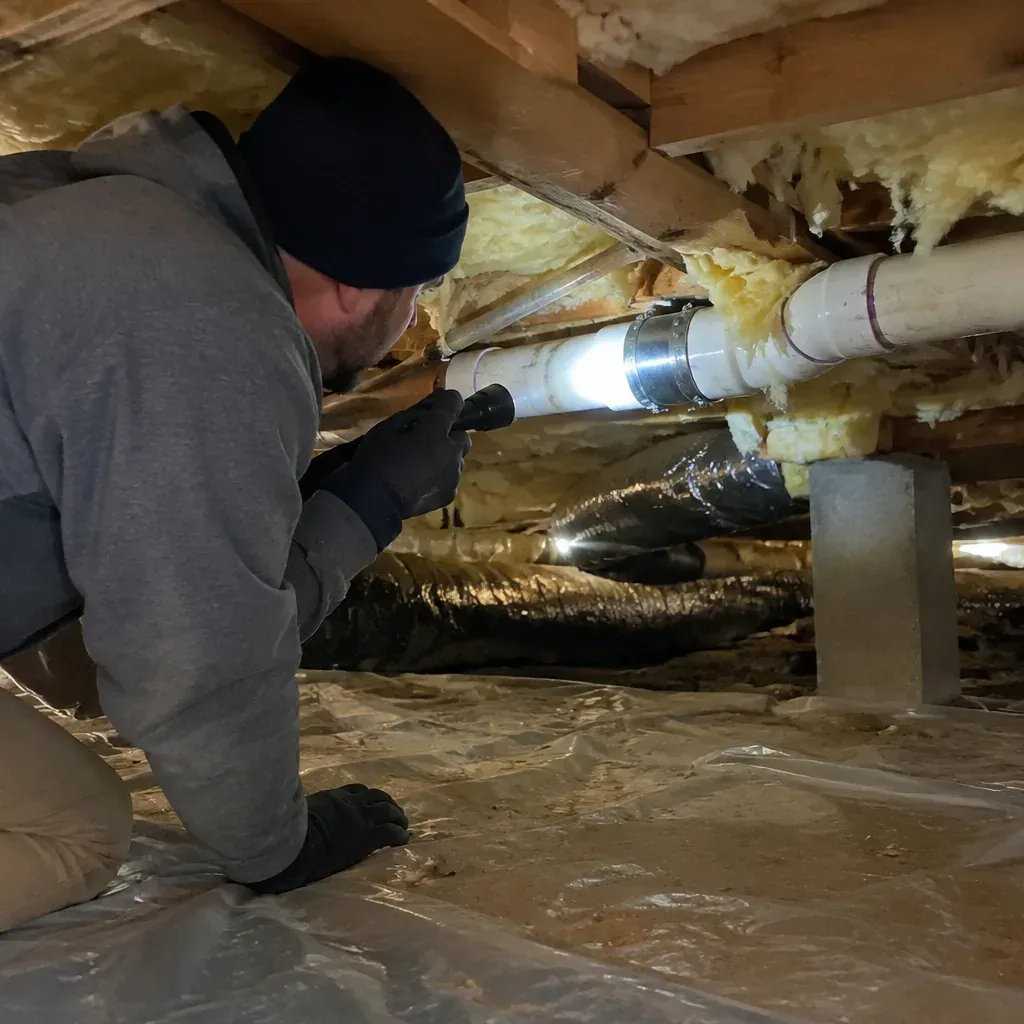
Keep nearby belongings clear of the work area so the pipe and fitting remain accessible. A leak at an edge can point to a poor seal, insufficient engagement, or another installation problem that needs correction before concealment. The section should also carry water as intended. This check matters whether a repair is in a ranch, split-level, or another house type in Boulder; closing the wall or floor first would hide evidence of a faulty connection.
Confirm Ratings Before Closing
Instructions for the specific coupling settle details that a broad description cannot: approved pipe systems, dimensions, end preparation, engagement depth, assembly sequence, and operating limits. Those details can differ among products that appear similar. If the instructions do not cover the pipe or intended installation, the fitting is not established as suitable for that use. Near Waneka Lake Park, or anywhere else in the Boulder area, the product documentation and the actual pipe must agree before the connection can be relied on.
A coupling needs enough sound pipe on both sides to grip and form a reliable connection. The choice then turns on the fitting’s movement and access requirements, plus the condition of the pipe ends. If material, size, or end condition cannot be established, suitability remains uncertain. For a Boulder repair, those points define whether the coupling is an appropriate part of the replacement.
Details to Check on the Coupling
- Confirm the fitting’s approved pipe materials and dimensions match both the existing line and the replacement section.
- Check pressure, temperature, and potable-water limits against the water line’s intended conditions.
- Compare end preparation, engagement depth, and assembly steps with the exact coupling model’s instructions.
- Check that the coupling accepts the existing pipe and replacement piece at their actual dimensions; a nominal size match by itself does not confirm a usable joint.
- For a slip repair coupling, verify there is room to move it over the pipe ends; for push-fit, follow the model’s stated end preparation and seating depth.
- Confirm the product is rated for the line’s pressure, temperature, and drinking-water use, then keep the repaired connection accessible for a pressure check.
Questions and Answers
Does a slip coupling need room to slide onto the pipe?
Cutting out a damaged section leaves two pipe ends that need to be aligned before the coupling is secured. Its pressure, temperature, and water-use ratings must also suit the line. If surrounding pipe or the enclosure prevents the required travel, another approved connection method may be needed.
Can a push-fit coupling join copper and PEX pipe?
Only if the exact push-fit model is approved for each pipe material and dimension being joined. If the model provides an insertion mark, use it to check that the pipe is fully seated. A fitting that works on one side does not establish approval for the other. The replacement section and both connections have to meet the product requirements.
How can I tell whether the replacement joint is holding?
The coupling and both pipe ends should stay dry while the repaired line is under pressure, and the replacement section should carry water. Any new moisture means the joint needs attention before it is concealed. The fitting’s assembly requirements also matter: a dry joint does not by itself show that the correct model was used or that it was installed to its instructions.
What Should the Scope Identify?
Ask the pros we connect you with to name the coupling and document its approved pipe, dimensions, and ratings for a Boulder home near Chautauqua Park.
Call (303) 565-8339