Pipe Repair Clamps for Boulder Homes
A burst pipe repair clamp presses a gasket over a limited opening when its fit and rating suit the line.
A repair clamp can seal some localized openings on accessible pipe when its gasket fits evenly and its rating covers the pipe and conditions. Treat it as temporary if instructions limit its use, the damage exceeds its sealing area, or leakage continues; a damaged section may need replacement.
Spot a Drip, Spray, or Split
Keep clear if water reaches electrical equipment. In Boulder, note the signs in sequence: a damp mark near a supply line, droplets on exposed pipe, then a steady leak or spray. Around Coal Creek and Waneka Lake, freeze exposure depends on whether a particular line is unheated. A pipe repair clamp is a device that holds a seal over a localized opening; it may contain a leak only when its rated use matches the pipe and damage. Before selecting one, compare the maker’s limits with pipe material, outside diameter, pressure, and break type. If the tear exceeds its sealing range, the clamp is temporary and a replacement section may be needed.
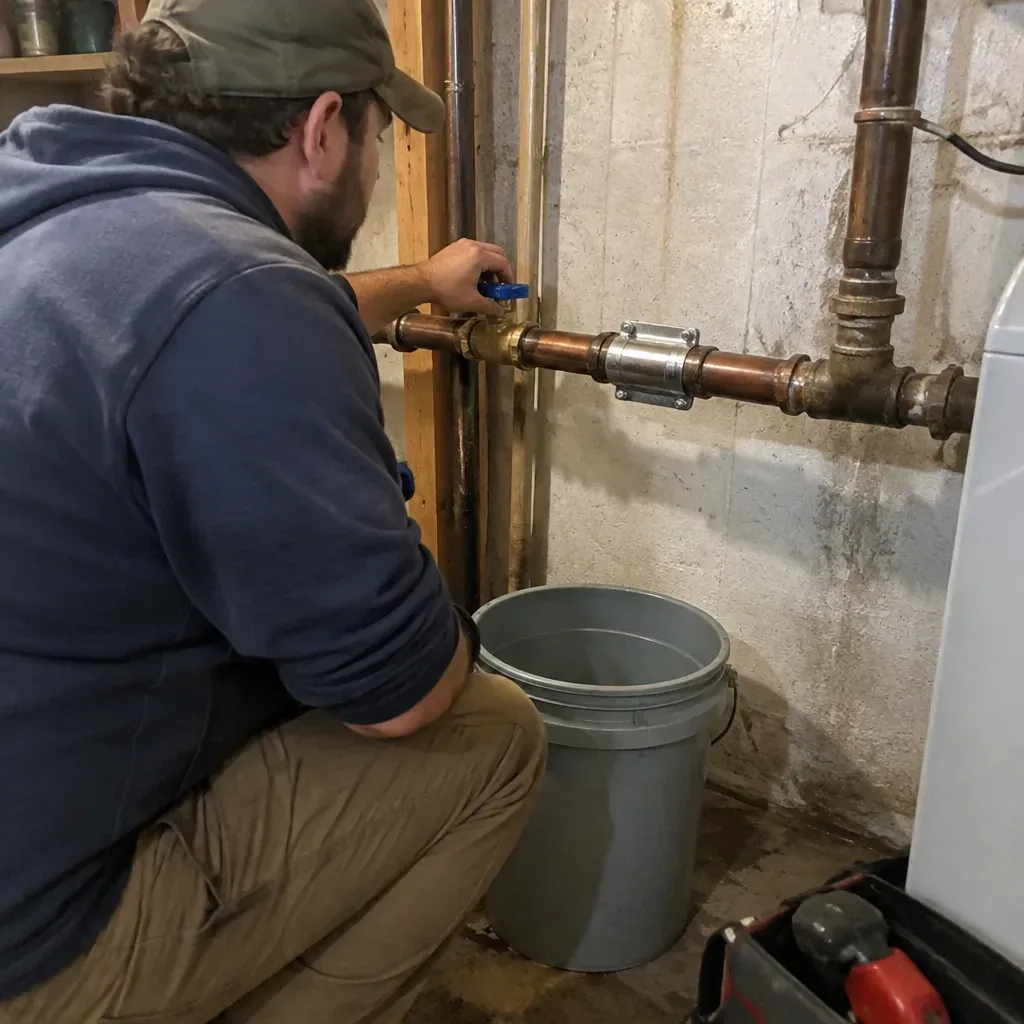
The clamp’s body holds a gasket against the pipe, while its fasteners draw the assembly into place. That arrangement depends on the gasket making broad, even contact; a narrow edge pressing against the pipe can leave a path for water. The visible hardware alone does not show whether the seal is suitable for continued service. A homeowner should treat the product label and installation limits as part of the clamp itself, since those define where its design applies.
A water pipe clamp must correspond to the line it surrounds, including its material and outside diameter. Copper, PEX, and CPVC have different system requirements, so a clamp listed for one pipe type should not be assumed to suit another. In Boulder and nearby Louisville, the same label check applies regardless of house style: a ranch or split-level does not identify the pipe. The manufacturer’s stated fit range is the useful reference.
Trace Wetness Along Nearby Surfaces
Compare the pipe’s measured outside diameter with the clamp’s published range before judging its fit. If the band sits at an angle or the gasket does not lie evenly, tightening may not create the intended seal. Product descriptions can use similar names for clamps built for different dimensions, so appearance is not enough. For a Boulder homeowner looking across nearby Lafayette or Louisville, the measurement and product specification remain specific to the pipe in that home.
A clamp can match a pipe’s size and still be outside its rated pressure conditions. The rating and the manufacturer’s stated use describe limits on what the assembly is designed to contain; they are not established by a snug fit or a quiet leak. Check whether the product is intended for the water line’s conditions and whether its instructions restrict duration or setting. If those details do not cover the line, the clamp is not a sound selection.
The damage has to fit within the clamp’s sealing footprint, with enough sound pipe around it for the gasket to bear evenly. A long split or a distorted surface can leave part of the opening outside that contact area, even when the housing appears to cover it. A break beside a connection also changes what the clamp can seal. In Boulder, a visible opening gives a homeowner something to compare with the product’s damage limits, but not proof that the seal will hold.
Look at the Opening and Its Edges
Cold-weather freeze protection matters in Boulder because local guidance recognizes freeze-related burst-pipe risk, but that regional fact cannot identify why a particular pipe opened. A clamp’s suitability still turns on the product and the visible damage. For a homeowner near Coal Creek or elsewhere in town, water that returns at the opening after the line is back in service is a sign that the current seal has not contained it. The cost of the eventual repair depends on what the damage requires.
Read the full product instructions for limits on use, placement, and the condition of the pipe surface. A label that permits only a restricted or emergency use sets a boundary even if water stops appearing for a time. That distinction matters when a homeowner is deciding what a quiet clamp means: the absence of a fresh bead does not extend the product’s approval. Boulder’s cold season is a reason to take freeze protection seriously, not evidence that a specific clamp is appropriate.
Notice Whether the Leak Persists
A clamp may be the wrong fit when the opening is longer than its gasket, the pipe is misshapen at the contact area, or the break reaches a joint. These conditions leave the seal without an even surface or enough room to isolate the leak. If water continues to appear, or the product instructions do not allow the conditions at the pipe, a clamp should not be treated as a dependable endpoint. The damaged area may call for a cut-out and replacement section.
When the damaged portion cannot be contained within an approved clamp’s sealing area, replacing that portion may be necessary. The replacement has to connect to the existing water line using compatible pipe and fittings, and the completed repair should be checked for leaks under pressure. A homeowner in Boulder should also keep the limits of the plumbing work clear: drying wet materials or rebuilding a wall or ceiling can involve separate work after the leak is addressed.
Limits to Check on a Repair Clamp
- Measure the pipe’s outside diameter and confirm the clamp’s listed pipe material and fit range before relying on its apparent wraparound fit.
- Note where water first appears: exposed pipe, a fitting, or a nearby finish. A stain alone cannot show whether the leak is reachable for a clamp.
- A long opening, distorted contact area, break beside a joint, or returning leak can mean the clamp cannot contain the damage.
- Read the clamp label for approved pipe material, outside diameter, working pressure, and the kind of opening it is designed to cover.
- Check whether the band can sit squarely around the pipe and its gasket can span the damaged area without crossing a fitting.
- If the split reaches a joint, branches widely, or exceeds stated coverage, a cut-out section may be needed instead of a clamp.
Questions and Answers
Does a pipe need to be dry before a repair clamp goes on?
Before fitting a clamp, dry the pipe surface so the gasket can sit flat against it. It is not suitable for every split, material, or pipe diameter. Check the manufacturer’s fit and damage limits; a clamp that does not meet them may leave water escaping.
What makes a pipe clamp a temporary repair?
It is temporary when the product is approved only for limited use, or when the opening or pipe condition falls outside the clamp’s stated limits. A dry surface while water is off does not establish that the seal will contain flow later. If leakage returns or the instructions do not permit continued service, the clamp has not settled the repair question.
What changes the cost of repairing a burst pipe with a clamp?
The cost depends on whether a compatible clamp can contain the opening or whether the damaged portion needs to be cut out and replaced. Pipe access, the damage’s extent, and the fittings needed for the existing line can affect the work. A clamp that is outside its rated use may not be a lasting value, even if it appears to fit.
Have the Clamp Specifications Ready
Share the clamp label, pipe type and diameter, and a clear description of where water is escaping with the pros we connect you with.
Call (303) 565-8339